
Reduce, reuse, recycle – creating favorable conditions for solar waste management
The 3R project – for Reduce, Reuse, and Recycle – aims to create a framework for multi-stakeholder consultation (both formal and informal) to encourage greater circularity in solar electrical equipment. Launched in 2025 alongside Benin’s Ministry of Energy, Water, and Mines, Geres is also taking on the role of coordinator of the consultation framework to encourage dialogue and train local stakeholders in waste management.
Context
Anticipating, organizing, and structuring the solar waste sector in Benin
In 2017, Benin adopted legislation aimed at attracting off-grid electricity providers to enable them to rapidly develop the sector. The country has also launched major rural electrification programs, distributing solar kits and installing more than 50 village mini-grids.
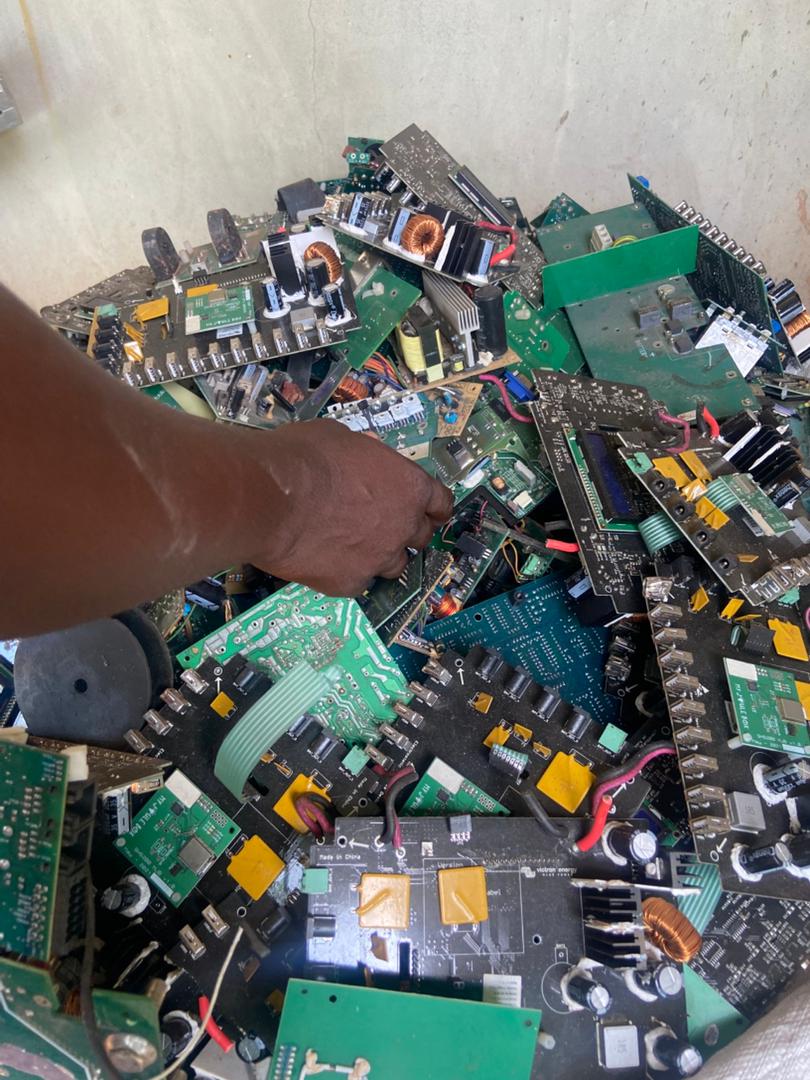
The growing spread of these electrification solutions, which vary in quality, has now resulted in a significant number of end-of-life products (solar panels, batteries, lanterns, etc.). Today, it is estimated that by 2030, the amount of waste from solar technology will rise to more than 55,000 tons in Benin.
The amount of this waste to be treated is expected to increase exponentially, but no structured end-of-life management system exists to date. In fact, the management of solar electronic waste (SEW) is neither governed by a specific legal framework nor provided for in the budgets of energy access projects. To date, the systems in place for the collection of SEW are neither systematic nor centralized, and the environmental standards in force are not respected in the country by the informal sector.
As a result, the lack of suitable treatment solutions and local dismantling and material recovery capacity leads to:
- the accumulation of solar waste in homes, businesses, and communities;
- dangerous informal practices in communities (artisanal decontamination, burning, illegal storage, etc.);
- economic losses related to unrecovered materials (plastics, aluminum, copper, lithium, electronic cards);
- a lack of reliable data for planning the circular energy transition.

Structure is needed to protect residents and the environment
Although waste electrical and electronic equipment (WEEE) represents a limited share of total waste volume, it accounts for up to 70% of its toxicity.
In Benin, informal dismantling practices expose young people and women to hazardous substances such as lead, mercury, and cadmium, causing serious impacts on human health. These practices also contribute to soil, water, and air contamination, compromising the environmental benefits expected from the solar energy transition.
The structuring of the DES sector also represents a major social opportunity. It promotes the gradual inclusion of informal actors in safer value chains, creates decent local jobs, and develops technical skills in repair, reconditioning, and recycling. The 3R project thus aims to transform an environmental challenge into a lever for training, professional integration, and circular energy transition, by bringing together all stakeholders.
Enormous environmental and health risks are taken to recover a few valuable materials (plastics, aluminum, copper, etc.). Conversely, organized management of end-of-life solar equipment secures investments, improves the sustainability of companies’ business models, anticipates regulatory requirements, and strengthens the credibility of the off-grid sector at the national and international levels.
Solutions
For circularity and a fair energy transition in Benin.
The 3R project aims to establish favorable conditions for the sustainable prevention and management of end-of-life solar photovoltaic equipment in Benin. To achieve this, Geres is developing its project around three main areas of action.
Prospective studies
Two prospective studies will be conducted to deepen knowledge of the sector, identify off-grid solar sector stakeholders and their needs, and characterize the available resource base. The second study will focus on defining a technical and economic model for the workshop(s) to be created or reinforced based on the pilot workshop.
Framework for consultation between stakeholders
In order to bring together stakeholders and initiate productive dialogue, Geres will propose the establishment and management of a framework for consultation, particularly between private suppliers of solar products. This framework will facilitate the sharing of experiences and the definition and co-construction of the operating model for the ESH management workshop in Benin. This will be done in accordance with international rules and standards: ECREEE for ECOWAS, rules on the import and export of hazardous waste (Bamako and Balle Conventions).
Pilot workshops
Following the assessments carried out and the creation of a consultation framework bringing together stakeholders, Geres will propose the establishment of a pilot workshop on techniques for collecting and managing solar electronic waste. These workshops will focus in particular on the reconditioning, repair, and recycling of components such as photovoltaic panels, batteries, and cables, among others. Led by local actors, these workshops will also enable the development of technical skills for their specific activities at all stages of the value chain. This support covers the acquisition of equipment for the treatment and recycling of solar electronic waste and financial support for the operational expenses of the stakeholders.
A multitude of formal and informal stakeholders to structure the value chain
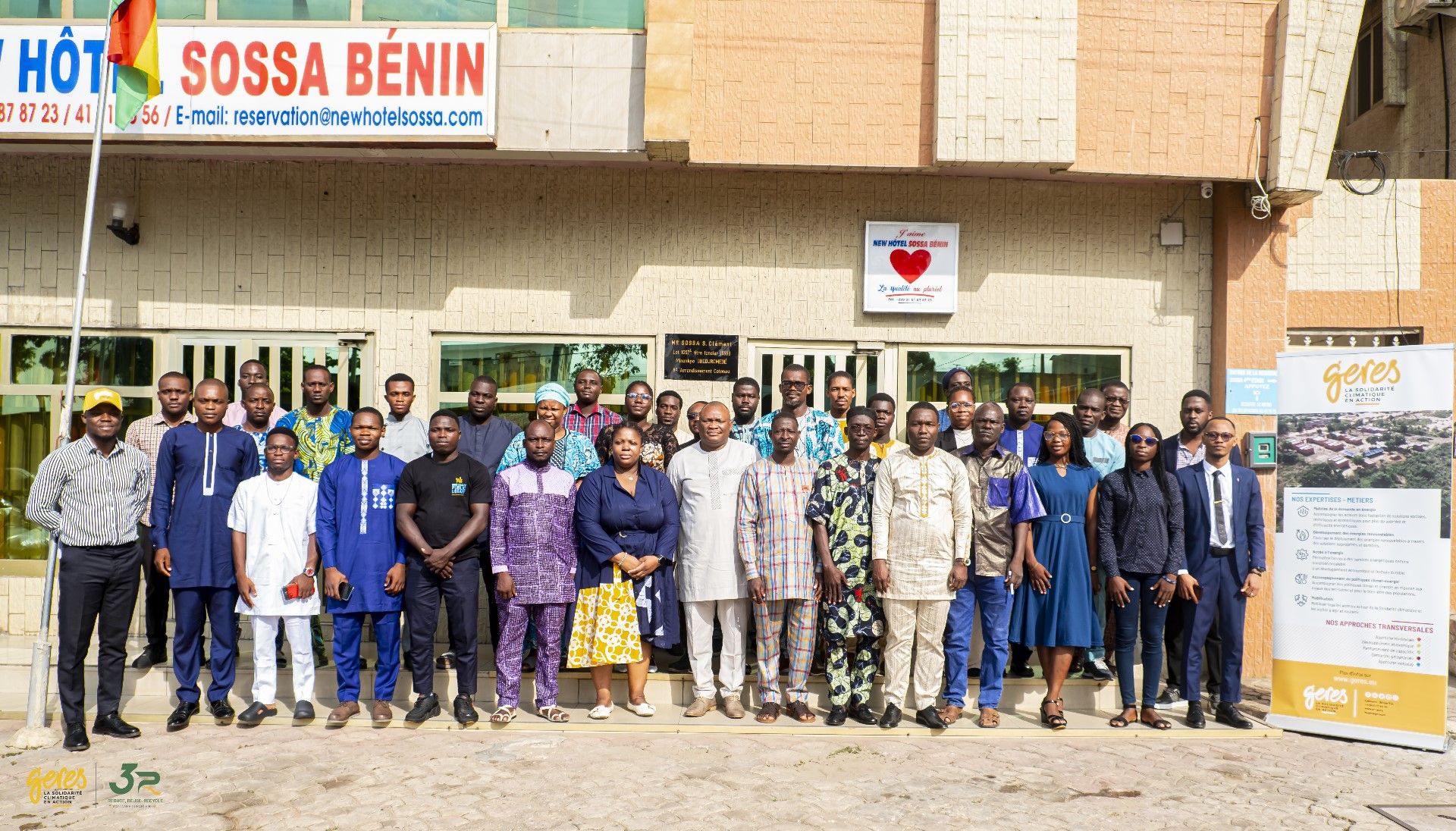
The 3R project benefits a range of public, private, and community actors involved in the solar energy and waste management value chain in Benin.
- Off-grid solar companies (importers, distributors, installers, and mini-grid operators) benefit from a structured consultation framework and tailored technical solutions for managing end-of-life equipment, thereby strengthening the sustainability of their business models and their compliance with future regulatory requirements.
- Informal waste management actors (young people and women collectors, repairers) benefit from technical training, support in structuring their activities, and gradual access to safer equipment and practices, promoting improved working conditions, reduced health risks, and the creation of decent jobs.
- Public institutions and local authorities benefit from reliable, forward-looking data to support energy, environmental, and territorial planning, as well as concrete tools for defining or improving regulatory frameworks for solar waste and WEEE.
- Households and local communities benefit from a healthier environment, reduced risks associated with informal e-waste treatment practices, and a more sustainable and inclusive energy transition.
Bringing together a wide range of stakeholders to work together
Technical partners
- Le Ministère de l’Énergie, de l’Eau et des Mines (MEEM) : through its Directorate General of Energy Resources (DGPER), responsible for developing and implementing energy policy, co-hosts the consultation framework for stakeholders in the solar sector of the 3R project.
- Le Ministère du Cadre de Vie, des Transports en charge du Développement Durable (MCVT): through its Directorate General for Environment and Climate, is a member of the consultation framework and defines waste management policies in Benin.
- La SGDS (Société de Gestion des Déchets et de la Salubrité) has a monopoly on waste collection and is the beneficiary of the DES sorting and storage facility.
Companies : The Franco-Beninese consortium Les Soleils du Bénin (Générale du Solaire & Aress), Mionwa (Powergen & Sunkofa), Weziza (Energicity) or Powercorner (part of the Engie group) are developing decentralized mini-grid energy infrastructures in different regions of Benin.
Financial partners


VOUS SOUHAITEZ AGIR EN FAVEUR DE LA SOLIDARITÉ
CLIMATIQUE ET SOUTENIR NOS ACTIONS ?
Dites-nous qui vous êtes et découvrez vos moyens d’action
CITOYEN·NE·S
Parce que la Solidarité climatique est l’affaire de toutes et tous, le Geres vous donne les clés pour passer à l’action.
ENTREPRISES
En tant que dirigeant·e d’entreprise, employé·e ou client·e responsable, vous avez le pouvoir d’agir au quotidien.
INSTITUTIONS & COLLECTIVITÉS
Soutenez nos actions en France et à l’international et devenez un acteur de la Solidarité climatique.
FONDATIONS
En vous engageant aux côtés du Geres, vous contribuez à la mise en œuvre d’actions innovantes et concrètes.