
Access to Sustainable Energy for All in Mali, Phase 2
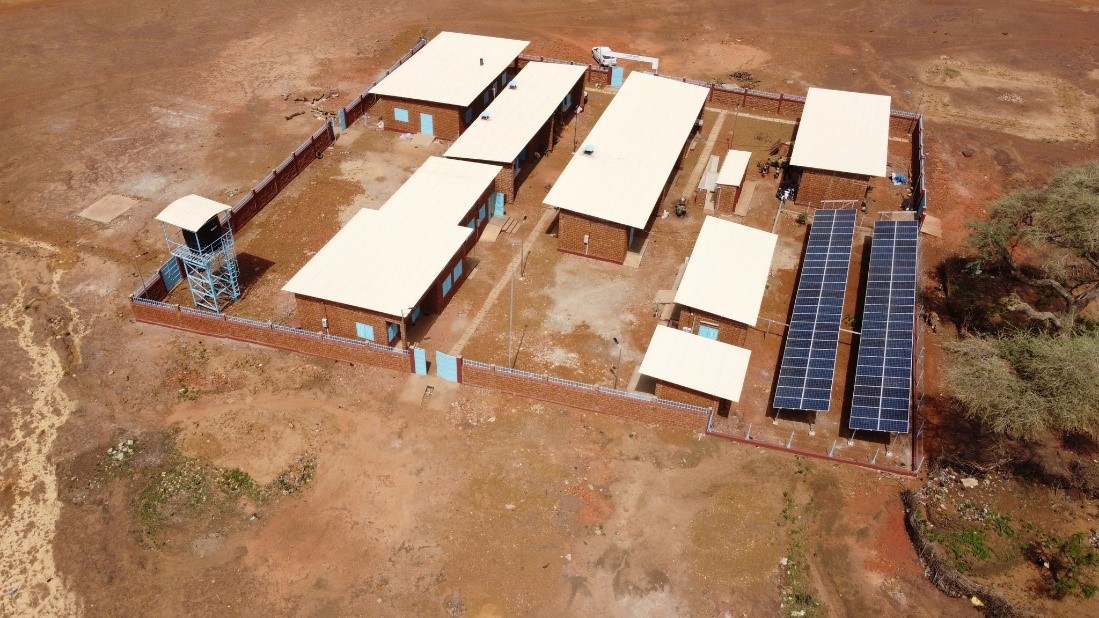
The concept of the Green Business Area (GBA) is an innovative model for economic development zones and a catalyst for rural businesses, based in particular on access to energy services. Geres has been developing this concept in Mali since 2014 through two pilot GBAs funded by Agence Française de Développement, followed by a project involving six GBAs implemented with financial support from Sweden in Mali through its agency, Sida. A second phase, part of a vision to scale up the GBA model, began in 2022 with funding from ASDI and was able to continue thanks to financial support from the European Union Delegation in Bamako. By 2027, 16 GBAs will be operational in Mali.
Context and issues
Like other countries in sub-Saharan Africa, Mali faces significant energy challenges, both in terms of access and the quality of that access. Among the key characteristics of Mali’s energy sector, we note that electrification rates remain very low, especially in rural areas (estimated at less than 20% in rural areas compared to 55% in urban centers).
In rural areas, local energy service providers operate in remote rural areas through public-private partnerships with national agencies. The promotion of decentralized energy solutions based on renewable energy aims to address the multiple challenges of electricity access in rural sub-Saharan Africa. Renewable energy offers an opportunity to rethink electrification models at the local level, based on the resources and needs of a given region. With its high solar radiation potential, Mali is an ideal location for promoting renewable energy innovations such as photovoltaic power.
Learn more about Phase 1 of the “Access to Sustainable Energy for All in Mali” project
challenges
The development of rural areas cannot take place without sufficient and high-quality access to energy—and in particular, electricity—to support entrepreneurial activities, the creation of added value, and job creation. To this end, solutions tailored to their specific needs must be considered.
Energy-producing users, particularly entrepreneurs, have an important role to play in supporting the economic development of rural areas. However, they must also be supported in their development so that the benefits of access to electricity translate into added-value creation, job creation, and improved living conditions for local populations. Other barriers to their development—such as financing, training, and market access—must also be addressed during both the launch and growth phases.

Goals and Solutions
The AEDTT Phase 2 project aims to contribute to the stability and local economic development of rural areas in Mali (the regions of Koulikoro, Dioïla, Bougouni, Kita, Koutiala, Ségou, and San) by supporting the deployment of sustainable solutions for access to renewable energy through a territorial approach, including the promotion of low-carbon initiatives and capacity building for local stakeholders and professional sectors.
It builds on previous efforts and is strengthened by lessons learned from past and ongoing experiences through the deployment of three new renewable energy zones (GBAs) and support for the five GBA constructed at the start of the AEDTT2 project (prior to ASDI’s withdrawal from Mali).
It is organized around four main components:
- Sustainably increase renewable energy production capacity in rural areas through technically appropriate, economically viable solutions and inclusive, sustainable management and governance frameworks.
- Within the ZAE zones, improve the economic resilience of very small businesses through better market access, while promoting inclusion and decent working conditions.
- In the areas where ZAEs are located, support and strengthen the resilience and initiative of local stakeholders (civil society, local governments, decentralized technical services) through greater consultation and mobilization around the economic development of their region as well as energy and low-carbon issues.
- Additional studies, research, monitoring and evaluation, and capitalization on lessons learned (within projects/ZAEs and among peers, including outside Mali).

And 4 outcomes:
- Establish 3 new GBA and 3 Market Gardening Areas (MGA), taking into account the specific characteristics of each region and the inclusive nature of the initiative.
- Support micro-enterprises in 8 GBA and the 12 MGA to maximize the economic (added value, jobs, etc.) and social (decent work, worker safety, inclusion, etc.) impacts of access to energy.
- In the areas where the GBAs are located, support and strengthen the resilience and initiative of local stakeholders (civil society, local governments, decentralized technical services, etc.) through greater engagement on energy and low-carbon issues.
- Conduct additional studies, research, monitoring and evaluation, and share lessons learned (within projects/GBAs and among peers, including outside Mali).
Analysis
We invite you to read this joint interview with Grégoire Gailly, ZAE+ Manager, and Cécile Henriot, Director for West Africa, about the ZAE+ action program, a driver of sustainable energy and job creation in Mali.

Beneficiaries
- 6 local governments
- 80 entrepreneurs based in Phase II ZAE who have received support and training.
- 80 entrepreneurs based in ZAE funded in previous phases benefit from networking opportunities and initiatives to facilitate market access
- 12 women’s vegetable-growing cooperatives (comprising approximately 600 women).
- 1 social enterprise managing and developing the ZAE in Mali (GBA)
- 24 supported local “low-carbon” initiatives, of which at least one-third are led by young people and at least one-third are led by women.
Technical Partners
Implementing Partners
- Green Biz Africa (GBA): A Malian social enterprise founded by Jade and Geres, GBA is a company that develops economic activity zones through electrification in rural and peri-urban areas. It promotes access to high-quality energy for productive activities, thereby facilitating the establishment and livelihoods of microentrepreneurs and their positive impact (economic, social, etc.) on surrounding communities. It helps create jobs and improve the standard of living for the communities it serves. The company secures financing, builds the economic activity zones, and manages the energy generated in these zones to make it available to micro-entrepreneurs. In addition, it also operates a business renting and selling high-quality solar kits to professionals and surrounding communities, reaching even the most remote areas.
- AMEDD: The NGO AMEDD Mali, founded in 1998, is a Malian organization specializing in sustainable development, with offices in Koutiala, Bamako, Yorosso, and Bougouni. It is primarily active in the fields of agriculture, renewable energy, cartography, remote sensing, and rural development. This NGO works in the three areas of sustainable development: the economy, through its economic development department; social issues, through its social empowerment department; and the environment, through its natural resource management department.
Its initiatives include literacy programs, the development of local biofuels, the distribution of seeds and improved agricultural techniques, post-harvest processing and treatment, and support for communities and women’s groups.
Institutional Partners:
- The National Energy Directorate (DNE) is a key institution in Mali’s energy sector. It was established by Ordinance No. 99-013/P-RM of April 1, 1999, and plays a strategic role in the country’s energy development. The DNE’s missions include the management and development of energy infrastructure, the promotion of renewable energy, and the implementation of regional power interconnection projects.
- AMADER (Malian Agency for the Development of Domestic Energy and Rural Electrification) is a Malian government agency established in May 2003. Its headquarters are located in Bamako. AMADER’s primary mission is to manage domestic energy consumption and expand access to electricity in rural and peri-urban areas. It aims to improve access to energy services for disadvantaged rural populations.
PARTENAIRES FINANCIERS
Union Européenne
The European Union (EU) has long-standing relations with Mali, dating back to 1958 with the opening of the first EU delegation in the country. These relations have intensified, particularly following the 2012 political crisis, during which the EU supported Mali’s territorial integrity and the return to peace and dialogue. The EU is the sole funder of the AEDTT2 project.
YOU WISH TO ACT IN FAVOUR OF SOLIDARITY
AND SUPPORT OUR ACTIONS?
Tell us who you are and discover your means of action
CITOYEN·NE·S
Parce que la Solidarité climatique est l’affaire de toutes et tous, le Geres vous donne les clés pour passer à l’action.
ENTREPRISES
En tant que dirigeant·e d’entreprise, employé·e ou client·e responsable, vous avez le pouvoir d’agir au quotidien.
INSTITUTIONS & COLLECTIVITÉS
Soutenez nos actions en France et à l’international et devenez un acteur de la Solidarité climatique.
FONDATIONS
En vous engageant aux côtés du Geres, vous contribuez à la mise en œuvre d’actions innovantes et concrètes.