NIGER
Context and challenges
Niger, a landlocked country in the heart of West Africa, is the largest country in the region, covering nearly 1.3 million km², 80% of which is desert or semi-desert.
With its seven land borders with Libya, Algeria, Mali, Burkina Faso, Benin, Nigeria, and Chad, Niger is a key transit zone for trans-Saharan migration and trade flows. The country has faced numerous cross-border security challenges for more than 10 years, which has impacted both the development of its inhabitants and the country’s other multidimensional difficulties.
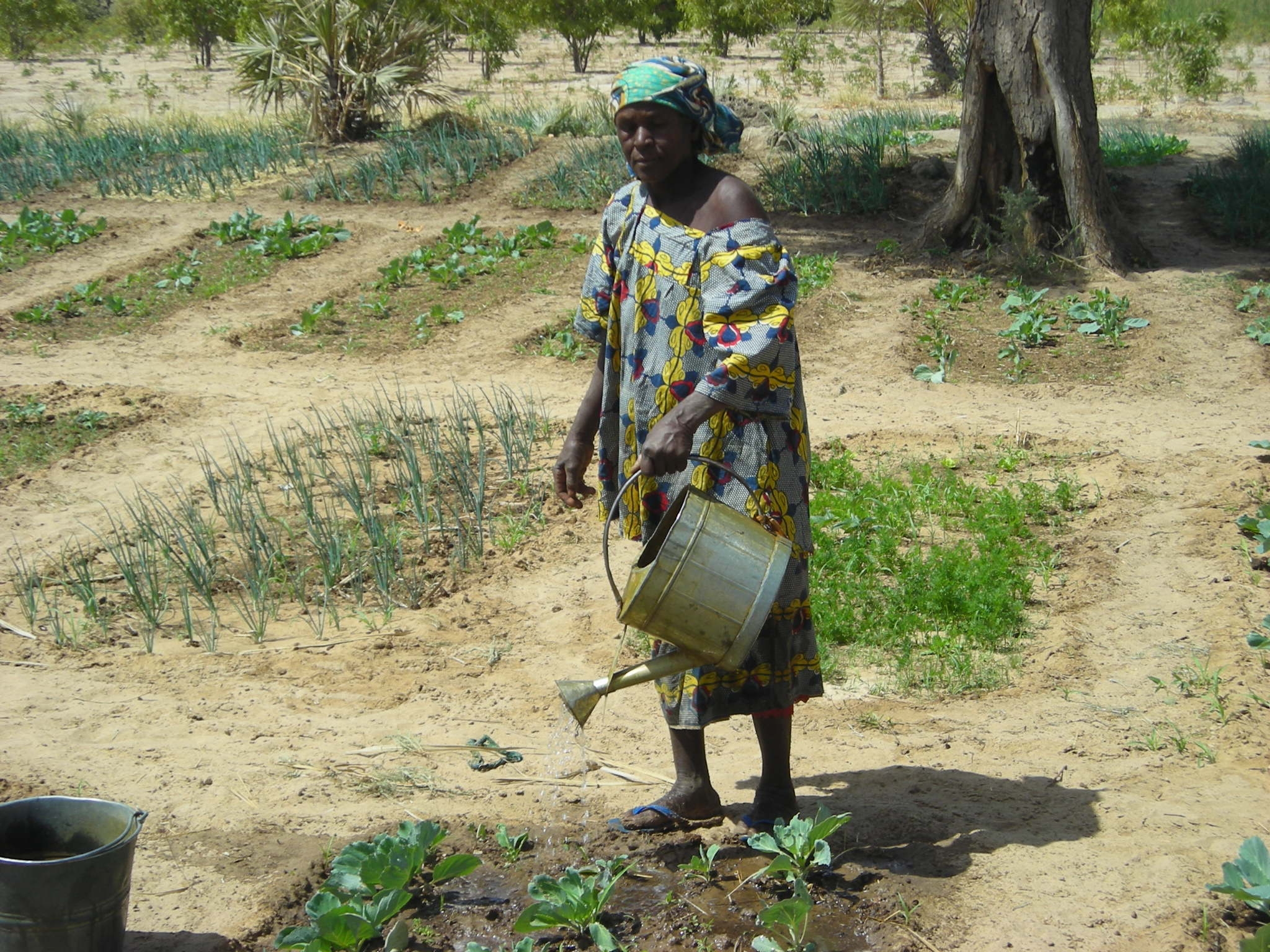
The Niger River flows through the southwestern part of the country for approximately 550 km, providing a vital and essential oasis where agriculture and inhabitants are concentrated. Its 29 million inhabitants (mid-2025 estimate) are unevenly distributed across the territory, with a very high density in the Sahelian strip and the Niger River valley, particularly around the cities of Niamey and Zinder.
The main sources of income are subsistence agriculture, livestock farming, and informal trade, with mining (uranium, gold) accounting for a significant share of exports. The informal sector provides a livelihood for the majority of the population, especially women. Agriculture accounts for less than 40% of GDP but employs more than 80% of the working population.
In this Sahelian country with an arid climate, desertification, climate risk, and the highest population growth rate in the world, are factors that exacerbate the vulnerability of populations that have always been impoverished.
Nevertheless, Niger is proactive in defining its nationally determined contributions (NDCs) and focuses primarily on adaptation to cope with the scarcity of resources. National reforestation policies, the Sustainable Development and Inclusive Growth Strategy (SDDCI-Niger 2035), and local land management initiatives are all political initiatives promoting climate and environmental action in Niger.
Extreme energetic insecurity at the root of chronic poverty
Niger has one of the lowest rates of access to electricity in the world, with less than 20% nationwide. There are also significant disparities within the country: 67% of the population has access to electricity in urban areas, compared to less than 10% in rural areas. The energy challenge is therefore crucial.
Approximately 90% of the energy consumed by households comes from woody biomass (firewood and artisanal charcoal). Consumption, which far exceeds forest renewal, is leading to rapid deforestation (estimated at 500,000 hectares per year) and contributing significantly to the country’s exponential desertification. This overexploitation, exacerbated by poverty and the lack of affordable alternatives, makes access to biomass increasingly difficult and costly for households, with a direct impact on women’s collection time and public health (smoke). This reinforces the urgency of targeted interventions in clean cooking.
With its significant solar potential, Niger has set targets for developing renewable energies and promoting alternatives, but sustainable biomass energy and the deployment of improved stoves remain the most immediate levers for reducing pressure on the country’s forest resources.

Geres in Sierra Leone
Geres has been working in Niger since 2024, providing its recognized expertise in clean cooking.
The HASKE project (which means “light” in the Hausa language), implemented by Geres and its teams and financed by the World Bank, is a technical assistance initiative aimed at strengthening the capacity of Niger’s Ministry of Energy to roll out a national policy promoting clean cooking.
The HASKE project comes at a time when the population, and women in particular, are extremely dependent on woody biomass (firewood and artisanal charcoal), which is leading to rapid deforestation and has significant health consequences due to smoke inhalation. The main objective of the project is to facilitate the adoption of clean and sustainable cooking solutions by:
- strengthening the governance and planning of the Ministry of Energy in response to the challenge of biomass energy.
- structuring the market, in particular by supporting the enactment of regulations facilitating the dissemination of quality standards to create an environment conducive to the development of a local and viable sector for the production and distribution of clean cooking equipment (improved stoves, LPG cooking).
- improving access to solutions by supporting the acquisition of more efficient equipment by households, with a particular focus on vulnerable populations.
The technical assistance provided by Geres through HASKE supports the development and implementation of Niger’s National Clean Cooking Strategy (SNCC), following in the footsteps of the World Bank, which is committed to supporting climate resilience and access to sustainable energy in Niger. The HASKE project focuses on operationalizing this strategy by providing the expertise needed to translate national objectives into concrete and measurable actions on the ground.
WOULD YOU LIKE TO TAKE ACTION
AND SUPPORT WHAT WE DO?
Tell us who you are and find your means of action.
CITIZENS
Because Climate Solidarity is a challenge we face collectively, Geres gives you the possibility to make a difference.
PRIVATE SECTOR
As a business executive, an employee or a customer, you have the power to take action in your everyday life.
LOCAL AND INSTITUTIONAL ACTORS
Support our actions in France and internationally and become an agent of change at our side.
FOUNDATIONS
By supporting Geres, you contribute to the implementation of innovative and concrete actions.