
Togo
CONTEXT AND CHALLENGES
Togo, a small country in West Africa, is characterized by its elongated shape and its borders with Ghana, Benin, and Burkina Faso. With an area of 56,000 km², the country has a very small coastline on the Gulf of Guinea, barely 55 km long. As the main gateway to international trade, this coastline is also a source of wealth.
Togo is recognized for its commitment to regional integration, and its deep-water port in Lomé is positioned as a commercial, industrial, and logistics hub. The country is also a historic leader in West Africa in terms of environmental protection and the fight against climate change.
Its 9.5 million inhabitants (mid-2025 estimate) are unevenly distributed across the territory, with a very high density in the maritime region around Lomé, which accounts for a significant proportion of the population, and along the main road axis.
The main sources of income are trade, agriculture (cocoa, coffee, cotton), phosphates (the main mineral resource), and the port services sector. The informal sector remains the main driver of employment, particularly for women.
Agriculture contributes around 40% of GDP and employs nearly two-thirds of the working population.
Togo, with its humid tropical climate in the south and Sahelian climate in the north, is bearing the brunt of climate change: coastal erosion, flooding, and land degradation, exposing its population to increased vulnerability.
An ambitious policy for rural electrification and the development of renewable energies in the country
Access to energy is characterized by wide disparities in electrification rates (national rate of around 70%) and massive dependence on wood resources for cooking. Like Benin, Togo has also embarked on an ambitious policy of electrification and renewable energy development, setting itself the goal of achieving universal access to electricity by 2030. The national access rate is increasing, but masks significant disparities (more than 90% in urban areas compared to less than 35% in rural areas).
Like many countries in West Africa, cooking is mainly based on harmful, inefficient techniques that rely on biomass energy (firewood/charcoal), contributing to deforestation and ecosystem degradation. This situation calls for increased efforts to structure the production chain for improved stoves, as well as the promotion of clean cooking alternatives.

GERES IN TOGO
Since 2023, Geres has been working in the commune of Lacs 1, in Aného, located in the Maritime region in southern Togo. This area is characterized by a tropical climate, which is increasingly disrupted by climate change.
The recent decentralization policy has given new impetus to local authorities in Togo: the commune of Lacs 1 is committed to advancing its local development strategy towards a dynamic and attractive low-carbon territory. It is within this framework that Geres’ first project in Togo was launched in 2023, inspired by the lessons learned from rural electrification initiatives carried out in Mali, among other places. The aim is to contribute to the economic development of the commune of Lacs 1 by providing access to sustainable, high-quality, and affordable energy services tailored to the needs of local entrepreneurs.
In line with its efforts to support local development and access to sustainable energy services, Geres and its teams have launched a specific project to improve working conditions for women fish smokers. The project involves providing improved ovens that are less polluting and consume less wood energy, as well as a pilot cold storage initiative for fishmongers. The goal is to strengthen the economic resilience of local women entrepreneurs while reducing the environmental impact of their activities.
In 2026, the project will be extended to three municipalities in Aného: Lacs 1, Lacs 3, and Lacs 4, in order to strengthen its support for women’s entrepreneurial groups and support the activities of the Maison de la Femme d’Aného (Aného Women’s Center), while integrating carbon valuation mechanisms.

Since the end of 2024, Geres has also been working in Togo through the FAME project, led by an international consortium across three continents (Africa, South Asia, Latin America & the Caribbean). This project aims to combat the patriarchal model and the barriers that hinder women’s economic autonomy by providing financial and technical support to feminist civil society organizations (CSOs) to strengthen women’s inclusive access to education, employment, and productive resources, while promoting decent working conditions. The ambition is to create a feminist, ecological, and influential economy, free from gender-based violence.
Geres’ projects in TOGO
Geres news in France
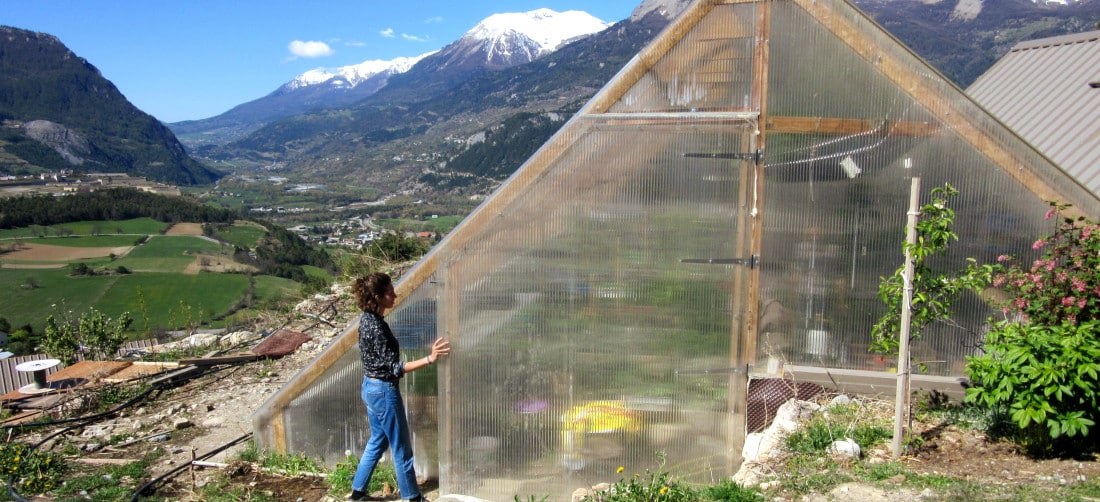
Under the sun of Provence, bioclimatic greenhouses for independent, ecologically responsible farming
Steered since January 2016 in the French region of Provence-Alpes-Côte-d’Azur with the aid of Geres, the Agrithermic consultancy and ...

The Empowermed project enhanced by a school of design and communication in Aix-en-Provence
Thanks to a fruitful partnership with ESDAC (Higher School of Design, Communication and Applied Arts in Aix-en-Provence), the ...
Energy poverty, social integration and inclusion with Valorem
Geres and the Watt for Change endowment fund of the Valorem group are partners for the first time. We welcome this new partnership, ...
WOULD YOU LIKE TO TAKE ACTION
AND SUPPORT WHAT WE DO?
Tell us who you are and find your means of action.
CITIZENS
Because Climate Solidarity is a challenge we face collectively, Geres gives you the possibility to make a difference.
PRIVATE SECTOR
As a business executive, an employee or a customer, you have the power to take action in your everyday life.
LOCAL AND INSTITUTIONAL ACTORS
Support our actions in France and internationally and become an agent of change at our side.
FOUNDATIONS
By supporting Geres, you contribute to the implementation of innovative and concrete actions.