
SOAP II: four years of warmer homes, cleaner air and lower energy use in Mongolia
After four years of implementation, the SOAP II (Switch Off Air Pollution in Mongolian Cities) project has helped thousands of households in Mongolia make their homes warmer and more energy efficient, while contributing to cleaner air and lower greenhouse gas emissions.

Implemented from 2022 to 2026 with support from the European Union’s SWITCH-Asia Programme, SOAP II combined home insulation, professional training, access to green finance and renewable energy solutions to tackle one of Ulaanbaatar’s major winter challenges: air pollution in ger areas. Nearly 200,000 households—almost half of all households in the capital—live in these areas, where household heating remains one of the city’s largest sources of winter air pollution.
SOAP II has shown that improving the thermal performance of detached houses can reduce fuel consumption, improve living conditions and cut greenhouse gas emissions, while helping build a stronger market for energy-efficient renovation.
Building a skilled insulation workforce
When SOAP II began, Mongolia had a limited number of qualified insulation professionals and no standardised training system for detached-house retrofits. The project responded by developing a comprehensive capacity-building programme for insulation professionals.
More than 250 insulation brigades completed technical training covering insulation technologies, occupational health and safety, waste management, marketing, sales and business development. Today, these professionals are better equipped to deliver high-quality, standards-compliant insulation services and access more stable year-round employment opportunities.
“By participating in the project, I not only learned insulation technology but also gained practical experience and built valuable professional connections. Construction workers now have an opportunity to earn a more stable income that is less dependent on seasonal work.”
– D. Nyamgerel, Insulation Advisor
Helping households take action with simple solutions
Full home insulation can deliver substantial energy savings, but the initial investment remains out of reach for many families. SOAP II therefore launched the Simple Solutions Campaign, promoting affordable measures that residents could implement themselves.
Through community training, demonstrations, manuals, online resources and peer-to-peer learning, participants learned how to reduce heat loss through windows, doors, floors, walls, roofs and chimneys using locally available, low-cost materials. Trained households then shared their knowledge with neighbours.
The project developed 14 simple insulation solutions capable of reducing household heat loss by up to 16% when implemented together. In total, 4,481 households adopted energy-saving improvements and 660 received roof insulation support.
“After insulating our windows, chimney and doors, the difference was immediate. Our home became warmer, cleaner and much more comfortable.”
– Resident, Chingeltei District
Demonstrating the homes of the future
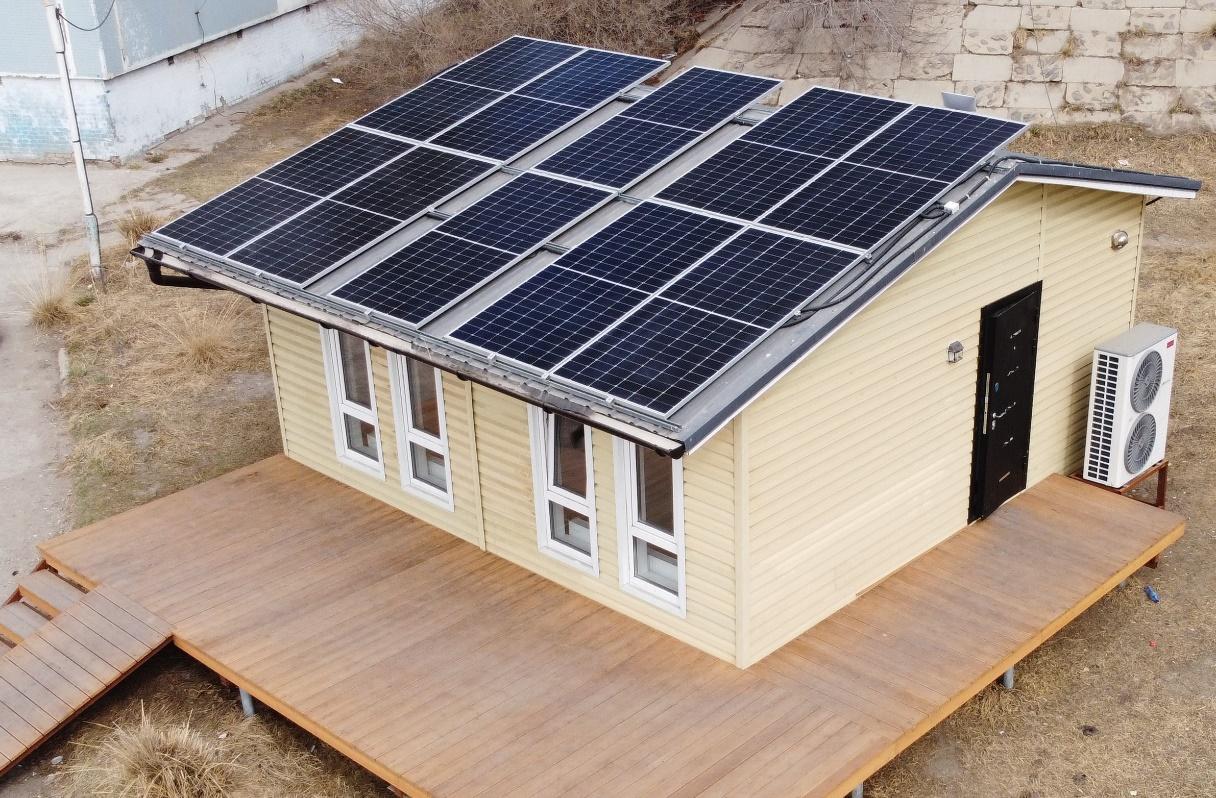
SOAP II also looked beyond retrofitting existing homes by demonstrating what future energy-efficient housing can achieve. At the Mongolian University of Science and Technology, the project designed and constructed a Nearly Zero Energy Building (nZEB) demonstration house combining high-performance insulation with a heat pump, rooftop solar photovoltaic system, battery storage and thermal energy storage.
The house now serves as a learning centre for homeowners, students, researchers, policymakers and construction professionals. During the project, 1,003 people visited the facility, and the design has already inspired a replicated house in Zavkhan Province.

Combining insulation with renewable energy
In partnership with Ureca LLC and Bodi Properties LLC, SOAP II equipped two fully insulated homes with rooftop solar photovoltaic systems and heat pumps, then monitored their performance under Mongolian climatic conditions.
The pilot confirmed that renewable energy technologies perform significantly better in well-insulated houses, reinforcing the need to combine energy efficiency with clean energy solutions.
Taking the approach beyond Ulaanbaatar
SOAP II expanded its activities to Darkhan-Uul Province, adapting the project’s methods to local conditions. Around 30 insulation brigades were trained and more than 100 households completed insulation improvements, confirming that the approach can be replicated beyond the capital.
To support wider replication, the project also developed a comprehensive Toolbox containing technical guidance, implementation methodologies and best practices for detached-house insulation. These resources are available to local governments and organisations interested in implementing similar programmes.

Building an ecosystem for long-term change
Making green finance accessible
Insulation services are cost-effective over time, but high upfront costs remain a major barrier for households. SOAP II therefore worked with five banks and three non-banking financial institutions to develop green loan products, including offers with an annual interest rate of 6%. The project also created an online learning platform on “Insulating detached houses: Green Financing” for financial-sector employees, helping them guide households towards suitable financing solutions.
Making insulation advice easier to access
SOAP II also strengthened access to information on insulation through a dedicated call center and the dulaalga.mn web interface, complementing the project’s technical guidance and resources.

Creating the conditions for scale-up
SOAP II brought together government institutions, local authorities, public organisations, financial institutions and private-sector actors to strengthen the environment for energy-efficient renovation. A study tour to France and Belgium enabled Mongolian policymakers and housing-sector stakeholders to explore European approaches to retrofitting and financing, and contributed to the creation of the “Clean Air” working group.
The project also supported wider initiatives, including the “Dulaan Baatar” campaign across nine districts of Ulaanbaatar and the Chingeltei District Governor’s Office “Dulaalya” campaign, which provided energy audit certificates to households and assessed the energy savings achieved through insulation.
Four years of collaboration have helped lay the foundations for scaling up energy-efficient renovation in Mongolia. By strengthening the insulation market, expanding access to green finance, building technical capacity and supporting public policies, SOAP II has shown how better housing can simultaneously reduce energy use, improve living conditions and contribute to cleaner air.
The project was implemented by Geres together with the Building Energy Efficiency Center (BEEC) of the Mongolian University of Science and Technology (MUST), the Mongolian National Construction Association (MNCA), the Mongolian Women’s Fund (MONES) and the Mongolian Green Finance Corporation (MGFC), with financial support from the European Union’s SWITCH-Asia Programme, Fondation pour le Logement des Défavorisés, the Global Alliance for Green and Gender Action (GAGGA) and the French Development Agency (AFD).