
Access to Energy and Energy Efficiency for Low-Carbon Development (
Promoting access to energy and energy efficiency for artisans and microenterprises in rural Benin
A major development challenge in Benin is to promote stability in rural areas and equity by developing rural economies, which face the greatest difficulties: rapid demographic growth, vulnerability to climate hazards and economic fragility, as well as more limited access to basic social services. Access to clean renewable energy is a powerful driver of local development; however, rural electrification programmes based on mini-grids do not always meet the needs of productive actors.
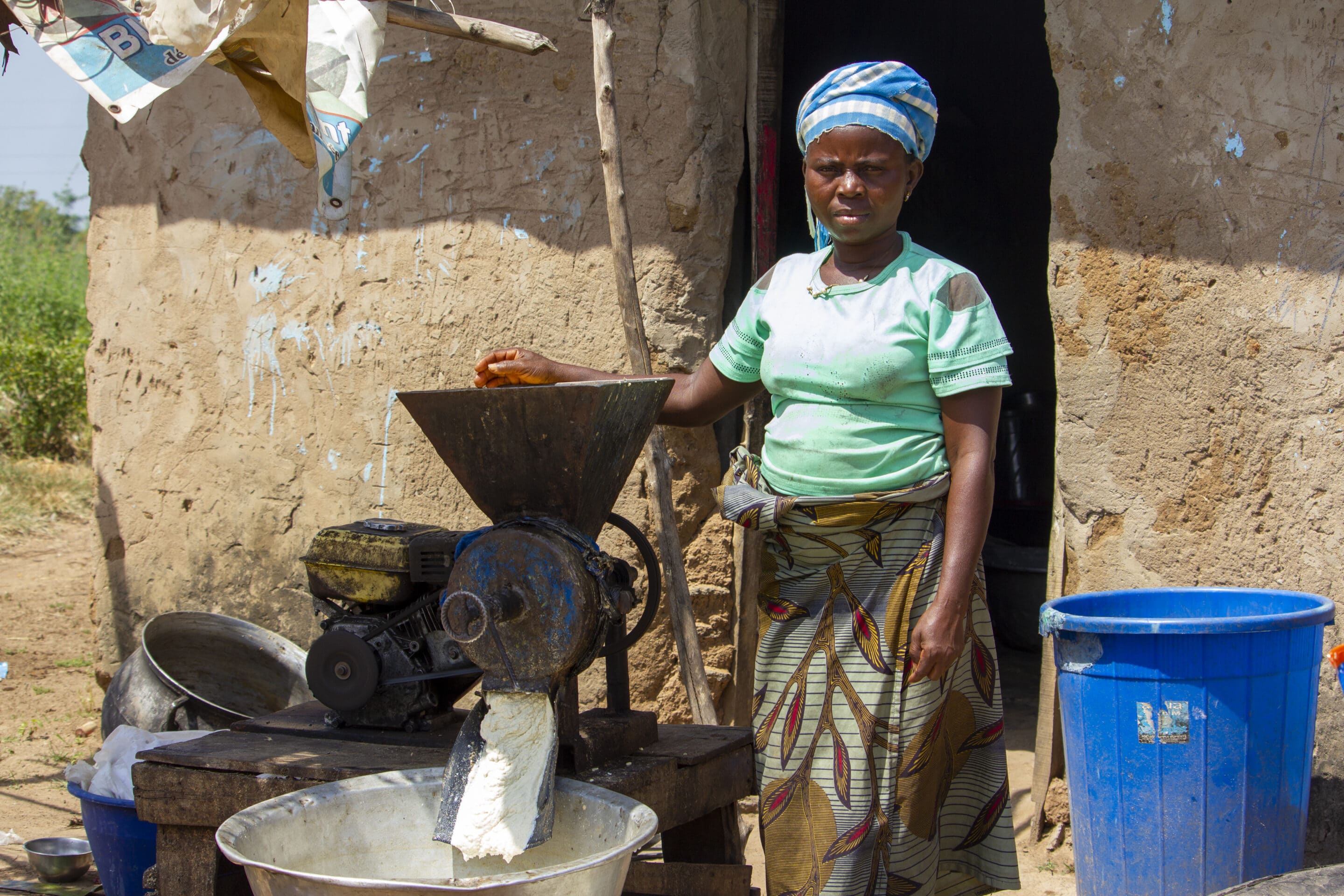
In addition, agricultural product processing still relies heavily on polluting and inefficient cooking or smoking technologies, which create health issues for women and place significant pressure on natural wood resources.
Context
The A3E project intervention is part of a dynamic of consolidation and scaling up of the achievements of the previous CEMATEER project (2016–2022), which helped structure the first synergies between craftsmanship and renewable energy in central Benin.
Implemented in the heart of the Collines department — a territory characterised by strong agri-food dynamism but facing a lack of productive energy infrastructure — as well as in parts of Donga, Borgou and Zou, the A3E project is closely aligned with the priorities of the Government Action Programme (PAG 2021–2026), particularly in terms of energy transition and the promotion of rural entrepreneurship.
At local level, the approach is based on deep integration into Municipal Development Plans (PDCs), aimed at strengthening municipalities’ project ownership so that energy becomes a cross-cutting lever for economic development. The project ensures the technical consistency of its actions with the national strategy for mini-grid deployment and the modernisation of the biomass-energy sector.
Challenges
Building on Geres’ experience with Electrified Activity Zones in Mali, Senegal and Burkina Faso, on ARESS and One Power’s expertise in mini-grids and solar kits, on IDID and SENS Benin’s experience in supporting rural entrepreneurs, and on Geres’ long-standing expertise in improved cookstove dissemination projects and carbon finance mechanisms in Africa and Asia, our ambition is to foster low-carbon development in rural areas of Benin through access to energy and energy efficiency for productive uses.
Project solution & objectives
The A3E project (“Access to Energy and Energy Efficiency for Low-Carbon Development”), implemented by Geres in Benin (2023–2026), is based on a technical approach centred on energy as a lever for economic and social transformation.
Access to electricity for productive uses (microenterprises)
The approach consists in supporting rural microenterprises to turn access to electricity into economic profitability:
- Energy incubation: the project adapts the “Electrified Activity Zones” (EAZ) model already tested in Mali. It supports the connection of microenterprises to mini-grids through operators such as ARESS and OnePower, while strengthening their entrepreneurial activities.
- Technical equipment testing: Geres selects and tests locally available productive equipment (mills, graters, sewing machines, water purification equipment, welding stations, etc.). This equipment must be energy-efficient, compatible with mini-grid power capacity, and easy to repair.
- Operator support: the project supports mini-grid operators in making their infrastructure financially viable by developing associated services such as productive equipment leasing for entrepreneurs.
Development of the clean cooking value chain
This component specifically targets groups of women agri-food processors, mainly for cassava processing into gari:
- Improved productive cookstoves: dissemination of the “ALAFIA” stove model, designed to reduce wood-energy consumption by 50% compared with traditional three-stone stoves, thereby optimising the women’s economic activities in the Collines.
- Local technical structuring: the approach relies on integrating local blacksmith-welders for the manufacture of metal frames and training thousands of people in the production of clay insulation to facilitate the autonomous construction and maintenance of improved productive cookstoves.
- Entrepreneurial support: assistance with group formalisation, economic development and business activity development.
- Improved working conditions: beyond energy efficiency, the solutions aim to reduce toxic smoke and respiratory illnesses for workers, and to improve women’s working conditions around cooking stations.

Cross-cutting support methodology
The technical approach is complemented by several methodological pillars:
- Territorial diagnostics: detailed analysis of energy needs and the potential of local microenterprises through digital tools.
- Capacity building: technical training on equipment, combined with entrepreneurial coaching (simplified business plans, financial management).
- Inclusion and gender: systematic integration of the specific constraints faced by women entrepreneurs into the choice of technical solutions.
In summary, Geres’ strategy in Benin goes beyond installing energy infrastructure and seeks to align energy with productive needs to ensure the economic sustainability of rural actors.

Results and impacts
Electricity component
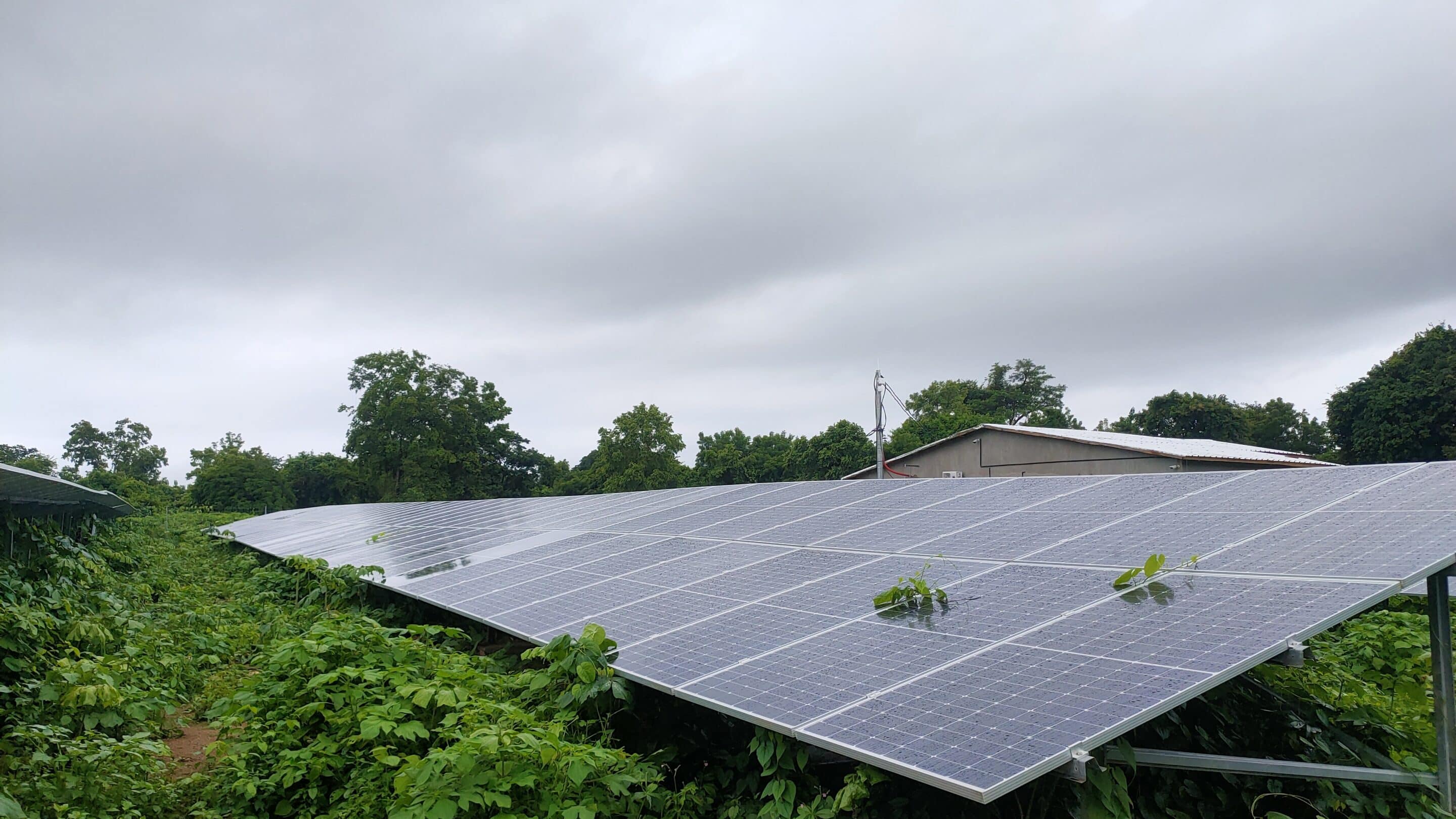
Around five solar mini-grid municipalities (Idajo, Gbowele, Samionta, Kotokpa and Akadjamey), small businesses receive support to access electricity. A techno-economic feasibility study makes it possible to size the technical solutions adapted to each microenterprise and analyse the viability and the economic and organisational implications of the investments made.
Specific individual solutions for around ten productive clients per mini-grid on their site, or solar productive systems (SPS) kits with sufficient capacity for productive uses, are made available, with investment subsidies for entrepreneurs, most of whom acquire the equipment through credit or leasing.
The project has a strong inclusion dimension, and all activities take into account the constraints faced by women entrepreneurs in rural Benin. The support is tailored to the needs and aspirations of each entrepreneur and designed as a series of mostly practical training sessions, either individual or in small groups.
Clean and efficient cooking component
- 430 stoves are disseminated to 108 groups of women cassava processors producing gari in four municipalities of Collines, Borgou and Donga (Ouéssé, Banté, Tchaourou, Bassila), helping reduce wood-energy consumption and improve health conditions.
- Each group includes around 15 women, representing support for more than 1,620 women, and all these groups are supported in networking within unions and umbrella organisations, with the objective of strengthening a federative approach for the entire value chain.
- 405 women from 27 leading groups are trained in stove dissemination within their district, sustainable entrepreneurship, legal formalisation of their groups, QHSE, sustainable marketing and packaging.
- Eight blacksmith artisans and eight apprentice blacksmiths receive professionalisation support (training and equipment) to improve improved cookstove production in Benin.
A monitoring system for stove dissemination and usage is being set up, with the objective of eventually integrating this value chain into a carbon finance Programme of Action (PoA).
A pilot project is also being implemented to technically and economically test sustainable alternatives to wood-energy use, based on the methanisation of agricultural waste and the use of biogas for cassava-to-gari processing, as well as rice parboiling or shea butter paste mixing, in order to compare the energy performance and economic development potential of the three value chains.

Partners
Implementation partners:
- ARESS
- One Power
- IDID
- CoForMo
- SENS Bénin
- EcoBénin
- La Fédération Nationale des Transformateurs et Transformatrices de Manioc du Bénin (FéNaTraM-Bénin)
Institutionnal partners:
- Les Communes de Ouéssé, Banté, Bassila et Tchaourou
- La Direction Générale de la Planification de l’Énergie et des Ressources (DGPER)
- Le Ministère du Cadre de Vie et des Transports, chargé du Développement Durable (MCVT)
Financial support


Downloads
WOULD YOU LIKE TO TAKE ACTION
AND SUPPORT WHAT WE DO?
Tell us who you are and find your means of action.
CITIZENS
Because Climate Solidarity is a challenge we face collectively, Geres gives you the possibility to make a difference.TAKE ACTION AS A CITIZEN
PRIVATE SECTOR
As a business executive, an employee or a customer, you have the power to take action in your everyday life.TAKE ACTION AS A COMPANY
LOCAL AND INSTITUTIONAL ACTORS
Support our actions in France and internationally and become an agent of change at our side.TAKE ACTION AS AN INSTITUTION
FOUNDATIONS
By supporting Geres, you contribute to the implementation of innovative and concrete actions.TAKE ACTION AS A FOUNDATION