
With the support of the Abbé Pierre Foundation, Geres has been able to help 94 Tajik households out of energy poverty
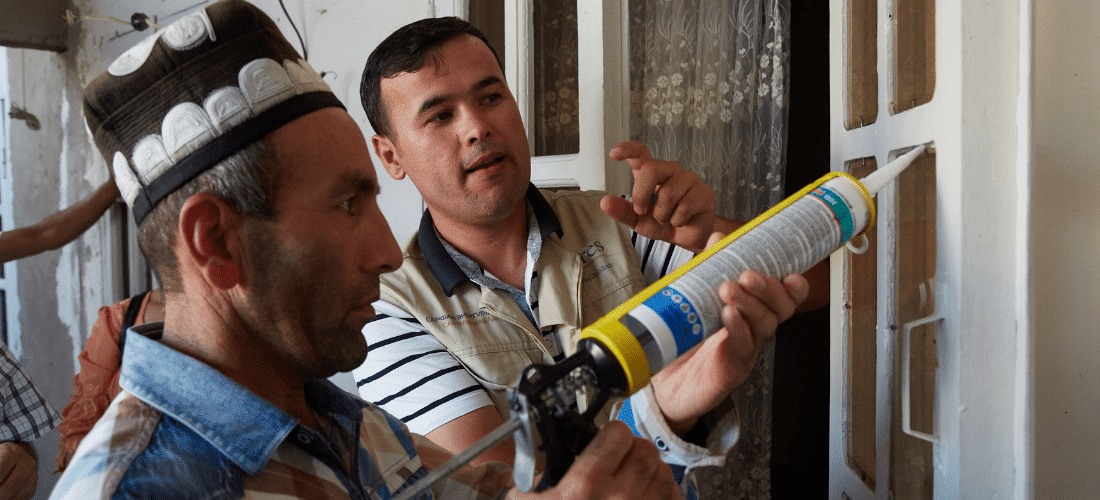
Towards the end of 2020, Geres undertook renovation and insulation work in Tajikistan. The aim: improving the thermal comfort of vulnerable households whose poverty has been exacerbated by the pandemic. The operation can now be counted as a success, thanks to the exceptional funding granted by the Abbé Pierre Foundation.
Overview et impacts of the operation
Carried out from September to December 2020, the project to reduce the energy poverty of vulnerable households impacted by the COVID19 crisis in Tajikistan was initially set up on the basis of work already done by Geres in Tajikistan. So the teams were in a position to get help quickly to the households.
In advance of the renovations, 11 training courses on thermal renovation were organized according to the site-school model and attended by 107 people, including 13 artisans. Apart from active awareness-raising, Geres hopes that the techniques learned during training will enable participants to earn additional income in future.
Although it is still hard to measure the health impacts of the COVID19 crisis in Tajikistan, the project has nevertheless helped to improve local awareness of the disease and the need for preventative measures and other action to reduce the spread of the epidemic.
To learn more about the project’s history, see also: Geres and the Abbé Pierre Foundation step up to help 100 families affected by the crisis in Tajikistan
More widely, this operation served to improve the winter comfort of 94 extremely vulnerable households in two rural districts, while enhancing their income by reducing fuel expenditure. The evaluation study conducted by Geres showed that the average annual saving on heating was 570 Tajikistani Somoni (€41), i.e. just over one month’s income!
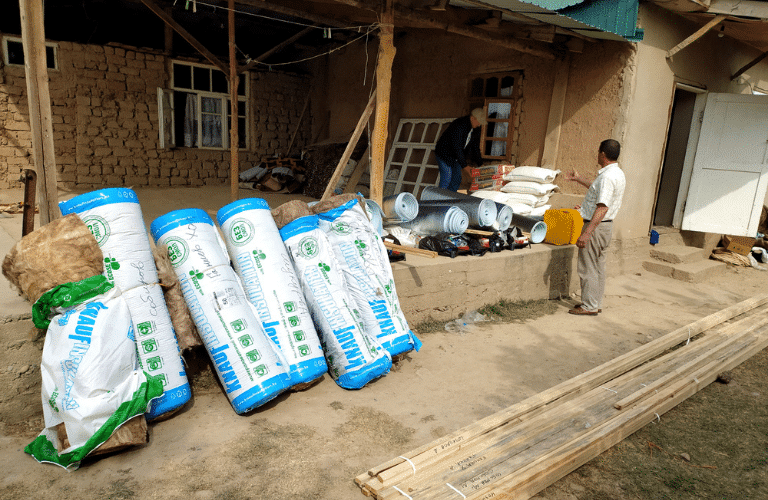
D’après les témoignages recueillis, 33% des habitants tadjiks ont affirmé ressentir plus de chaleur dans leur logement et plus de confort. Et 67% ont déclaré avoir « beaucoup plus chaud ».
Avec 10 ans de garantie sur les fenêtres double vitrage et 20 ans sur l’isolant, la durée de vie des rénovations est estimée à un minimum de 10 ans, assurant des bénéfices pour les ménages sur le long terme.
Des impacts positifs sur la santé des femmes et des enfants
De manière générale, 96% des foyers affirment avoir également remarqué une amélioration de la qualité de l’air intérieur et associent ce bénéfice à une diminution des problèmes de santé (refroidissement, grippe, toux particulièrement chez les enfants, douleurs articulaires, etc.).
A noter qu’au Tadjikistan, les femmes ont encore malheureusement la charge principale d’alimenter et maintenir le chauffage.
Parmi les enquêté.e.s, 40% des répondants notent que l’intervention bénéficie spécifiquement aux femmes et enfants puisqu’ils sont responsables du foyer et/ou restent comparativement plus longtemps dans leurs maisons.
Une réduction drastique de la consommation énergétique
Grâce aux opérations de rénovation et d’isolation thermique, la consommation de combustible pour les ménages a en moyenne baissé de 43% pour le charbon, 38% pour le bois et 35% pour la bouse (le mix énergétique traditionnellement utilisé dans les zones d’intervention). Une très belle nouvelle !
Concernant l’utilisation du bois, cette diminution a également engendré une véritable réduction de la collecte sauvage de combustible et donc a un effet positif sur la déforestation au Tadjikistan.
Même constat pour les émissions de dioxyde de carbone. La réduction de la consommation énergétique des foyers bénéficiaires nous a permis d’évaluer une baisse des émissions de CO2 à 2.3T/an par ménage, ce qui correspond à 2000t sur toute une vie.
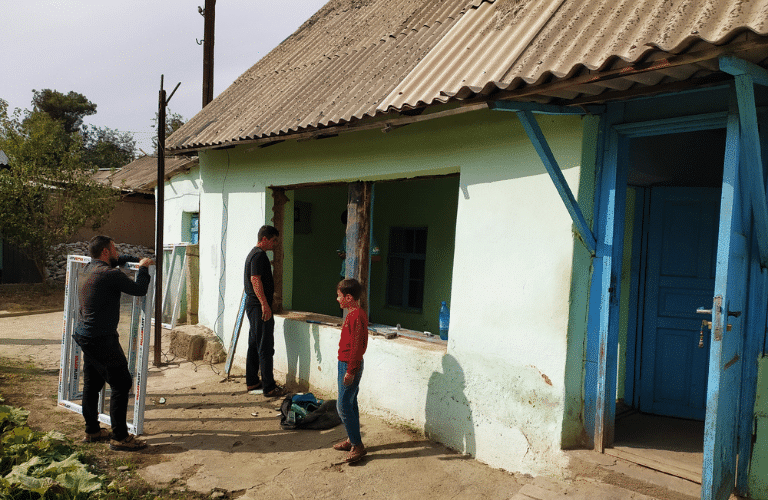
Des résultats satisfaisants qui poussent le Geres à élargir son champ d’action au Tadjikistan
Aujourd’hui, au vu de l’impact et de sa pertinence hors contexte d’urgence sanitaire, le Geres souhaite poursuivre son travail sur la rénovation des bâtiments existants sur une plus large échelle.
En plus de répliquer ce type d’opération sur une zone géographique plus grande, nos équipes comptent également diversifier les solutions d’amélioration de l’habitat en plus de l’isolation thermique. Avec cette fois-ci, le projet d’y inclure des solutions solaires passives.
Les actus du Geres au Tadjikistan
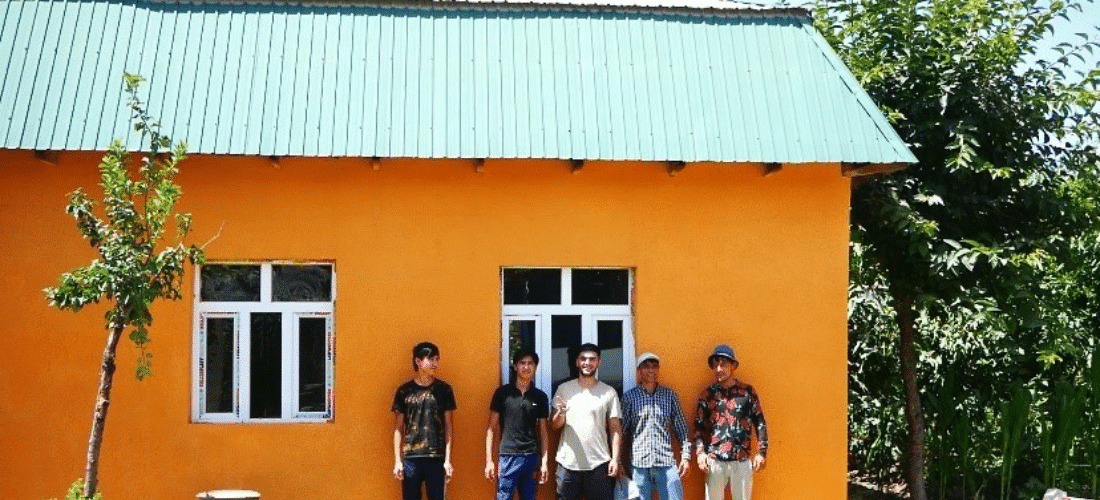
New opportunities for unemployed youth in Tajikistan
In october 2021, Geres in collaboration with local NGO’s, launched a series of action to help tackle tajik youth unemployment. Part of ...
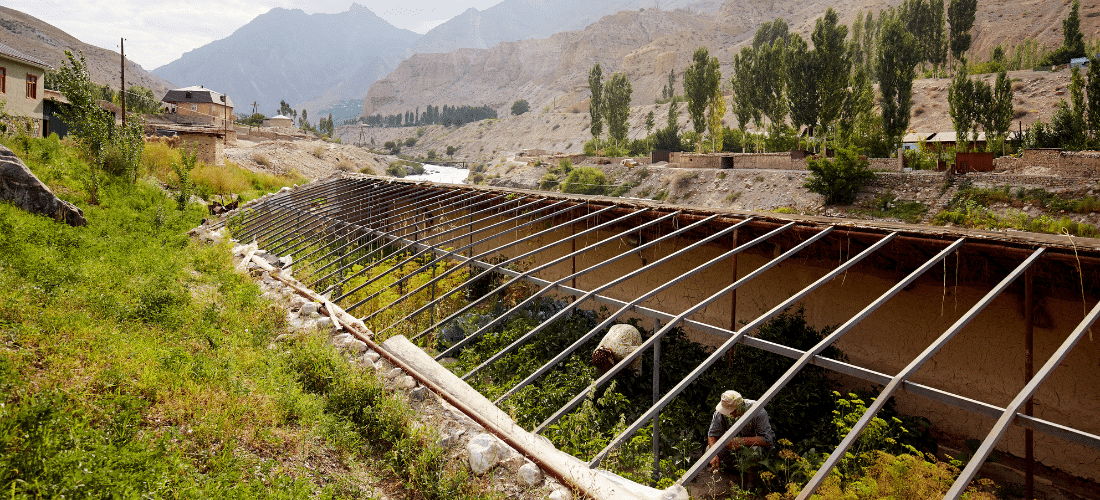
In Tajikistan, Geres is working to ensure greater resilience and better living conditions for rural communities
In the Rasht valley, poverty and climate warming are impacting food production and daily life. Launched in April 2022 and spanning ...
Innovative solutions warm houses up and trigger initiatives in Tajikistan
Testimonials. In 2021, Geres is launching a new project on sustainable energy solutions for Tajik housing. Munisa and her father, ...
VOUS SOUHAITEZ AGIR EN FAVEUR DE LA SOLIDARITÉ
CLIMATIQUE ET SOUTENIR NOS ACTIONS ?
Dites-nous qui vous êtes et découvrez vos moyens d’action
CITOYEN·NE·S
Parce que la Solidarité climatique est l’affaire de toutes et tous, le Geres vous donne les clés pour passer à l’action.
ENTREPRISES
En tant que dirigeant·e d’entreprise, employé·e ou client·e responsable, vous avez le pouvoir d’agir au quotidien.
INSTITUTIONS & COLLECTIVITÉS
Soutenez nos actions en France et à l’international et devenez un acteur de la Solidarité climatique.
FONDATIONS
En vous engageant aux côtés du Geres, vous contribuez à la mise en œuvre d’actions innovantes et concrètes.